

From Cash to Click: How India Became a Digital Payments Giant

The Spark
It began one afternoon when I watched, mesmerized, as an elderly flower vendor had a customer pay her at the street cart through a QR code because he didn't carry cash.
That was the moment it hit me that something quite remarkable was going on: India, with all of its challenges-people in poverty and the gaps in infrastructure-had jumped into a digital future. How did a country where millions lack basic amenities do what rich nations are still wrestling to do?
That question just wouldn't leave me alone, and I knew I had to understand the story behind India's digital payments miracle.
Empathy and Observation
To understand this transformation, I spoke to small business owners, researched government initiatives, and examined multi-source data. What struck me most was learning that, in fact, before 2016, more than 90 percent of the various transactions in India were in cash.
I interviewed a local shopkeeper, who told me how cash caused endless problems: risks of robbery, problems in giving change, and difficulty in tracking sales.
Meanwhile, banks were inaccessible for hundreds of millions of people. The digital divide wasn't just about technology; it was about economic inclusion. I began seeing that India's success with digital payments wasn't about convenience but about survival and dignity for millions.
Research and Design
As I dug deeper, I found that the success of India came from an unexpected marriage of factors: one, the government created a free and open-to-all public digital infrastructure for doing payments, UPI, or Unified Payments Interface; two, widespread smartphone adoption, even among poor people, provided the perfect platform; and three, the most surprising one, the demonetization policy in 2016 that suddenly took 86% of currency out of circulation-forced millions to adopt digital alternatives overnight.
My mentor helped me understand that this wasn't just technological innovation; it was a case study in policy design, timing, and understanding local needs.
The Prototype or Outcome
Through my research, I created a comparative analysis showing how India's approach differed from developed nations. India's UPI processes over 10 billion transactions monthly, with zero transaction fees for basic transfers. The system works in 12 languages, requires minimal smartphone capability, and even functions for people without bank accounts through digital wallets.
Most remarkably, it achieved this while maintaining security and preventing fraud. What India built wasn't just a payment system—it was an inclusive financial ecosystem. Features like instant refunds, QR code simplicity, and interoperability between different apps made it accessible to everyone from tech-savvy youth to elderly vegetable sellers.
What You Learned
This project changed my thinking about innovation and development. I knew then that "developing country" does not mean "behind"; sometimes, it means having the freedom to leapfrog old systems entirely. India succeeded at something the developed world could not because it did not have to carry the weight of legacy banking infrastructure.
But one of the biggest challenges in my research was realizing how technology alone will not create change; rather, it is the ecosystem that surrounds the technology. Policy, timing, cultural adaptation, and genuine need had to come together.
I also learned the power of public infrastructure over private, profit-driven models. In this project, I knew that empathy-driven design-understanding what a flower vendor or rickshaw driver actually needs-builds better solutions than top-down
technology.
The Next Step
My research has opened new questions I wish to explore: Can the Indian model work in other developing nations? What are the privacy implications of such wholesale digital tracking? And how do we ensure that elderly citizens aren't left behind as systems become more and more complex?
I hope to study similar initiatives in countries such as Kenya and Brazil in order to see
what factors are universal versus uniquely Indian. This project has sparked my interest in studying technology policy and inclusive development in ways that digital tools might bridge inequality gaps rather than reinforce them.
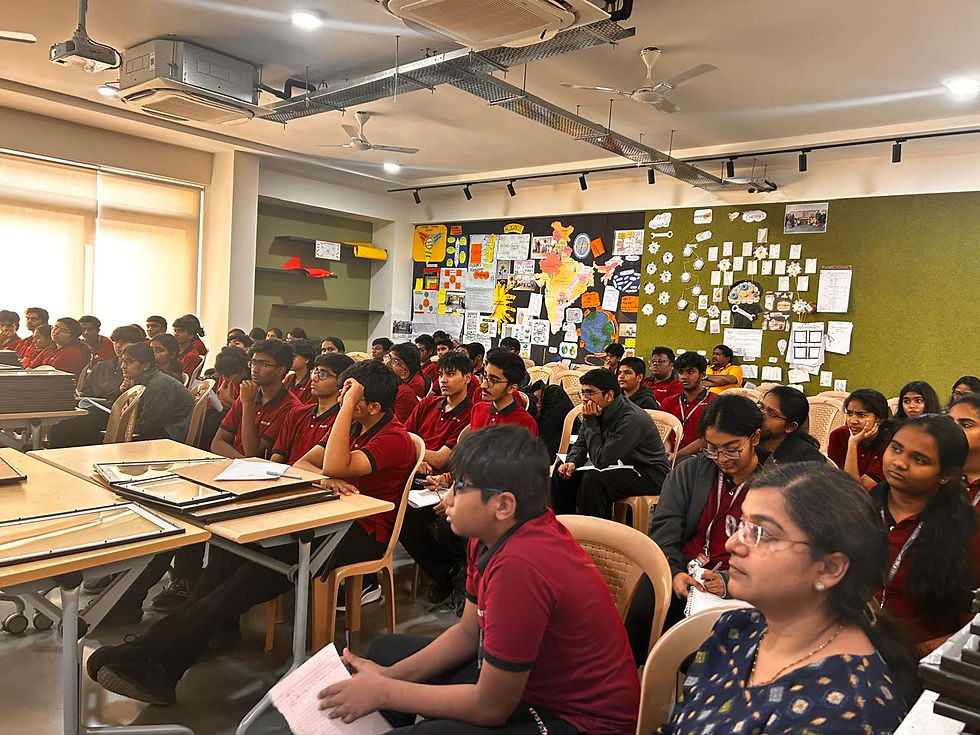
At Keystone International School, learners are encouraged to move beyond memorisation and engage critically with the world around them. This research on India’s digital payments transformation, led by a Grade 10 student, reflects how our project-based approach builds analytical thinking, empathy, and a deep understanding of technology, policy, and society.
If you wish for your child to study in an environment where curiosity is valued, real-world issues become learning opportunities, and students are guided to think like global citizens, Keystone International School offers that foundation.
Admissions for the upcoming academic year are now open. Enquire today to discover how your child can become a future-ready Keystonian.
Blog witten by,
Brihati
Grade: 10


Comments