

Building Effective Revision Skills: KIPP Social Emotional Learning (SEL) Session at Keystone International School

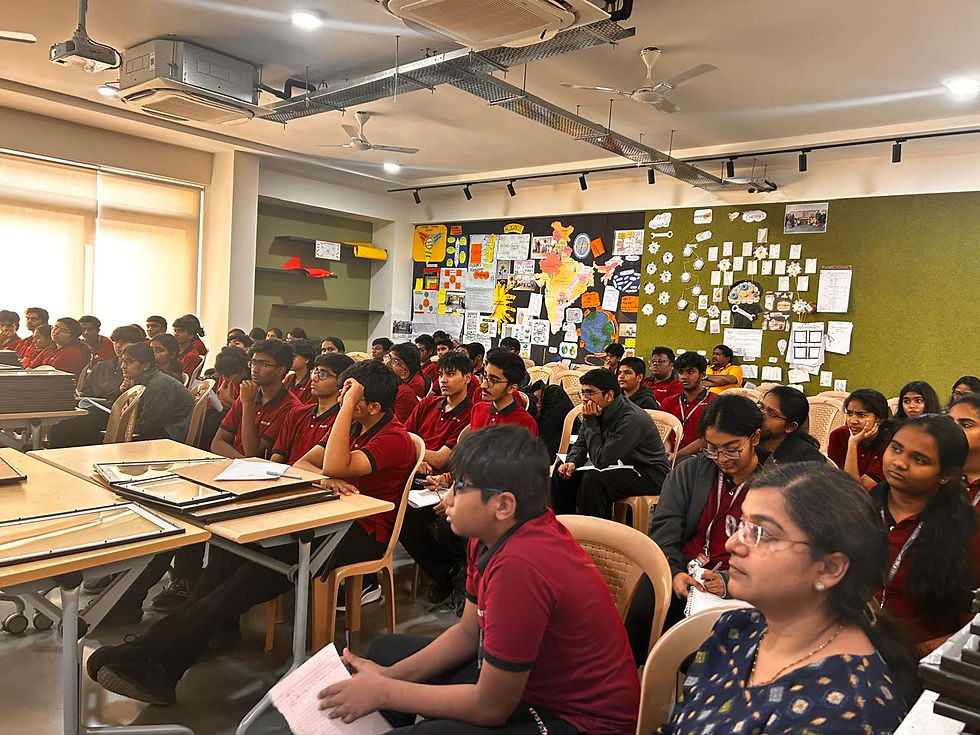
Keystone International School one of the top international schools in Hyderabad, conducted a KIPP Social-Emotional Learning (SEL) session on “Revising Effectively” on 28 January 2026, led by Grade 12 students. The session was designed to support learners in strengthening their revision practices by promoting self-awareness, strategic learning, and personal responsibility.
This peer-led initiative aligned with Keystone’s commitment to developing independent, reflective, and confident learners prepared for academic and life challenges.
Purpose of the Session
The primary objective of the session was to help students:
Understand the true meaning of effective revision,
Reflect on existing study habits, and
Identify high-impact strategies that improve retention and understanding.
By encouraging learners to evaluate how they revise rather than how long they revise, the session promoted a shift towards intentional and active learning.
Understanding Revision as Active Learning
Students were guided to define revision as:
Revisiting previously learned content, and
Actively improving comprehension and recall.
This discussion highlighted the distinction between passive strategies, such as rereading, and active strategies that require engagement, application, and reflection.
Learners were encouraged to adopt methods that promote deeper cognitive processing.
High-Impact and Medium-Impact Revision Strategies
The session facilitated reflection on the effectiveness of different study approaches.
High-impact revision strategies identified included:
Teaching concepts to others,
Attempting practice tests, and
Revisiting topics regularly over time.
Medium-impact strategies discussed were:
Reading or highlighting notes, and
Writing summaries.
Learners analysed how strategic choices influence learning outcomes, reinforcing the importance of selecting methods that actively challenge understanding.
Identifying Barriers to Effective Revision

Students openly discussed common obstacles to revision and collaboratively explored practical solutions:
Lack of a study space: Using a quiet desk or library environment
Poor organisation: Sorting materials and folders before beginning
Uncertainty about where to start: Prioritising challenging topics
Unfamiliarity with revision methods: Experimenting with different techniques
This segment normalised challenges and empowered learners to adopt proactive problem-solving approaches.
Effective Study Techniques Introduced
The presentation introduced research-backed study techniques to support sustained learning:
Pomodoro Technique: Focused study sessions of 25 minutes followed by short breaks
Spaced Repetition: Reviewing content at increasing intervals
Flashcards: Supporting active recall
Mind Maps: Visualising connections between concepts
Practice Tests: Identifying knowledge gaps and strengthening memory
These tools provided learners with structured, adaptable strategies suitable for different subjects and learning preferences.
Self-Reflection and Practical Study Tips
As part of the session, learners rated their current revision effort on a scale of 1–10 and reflected on areas for improvement. Key takeaways included:
Maintaining a revision checklist,
Incorporating movement breaks to sustain focus, and
Using flashcards to test recall rather than passively review content.
This reflective component reinforced accountability and encouraged learners to take ownership of their study routines.
Conclusion
The KIPP SEL session on Revising Effectively was interactive, reflective, and impactful. Led by senior students, the session equipped learners with practical revision strategies while fostering self-awareness, confidence, and responsibility in learning.
Such peer-led SEL initiatives exemplify Keystone International School’s approach to holistic education where academic success is supported by strong learning habits, emotional intelligence, and student leadership.


Comments