

When Kids Write Books, Something Magical Happens

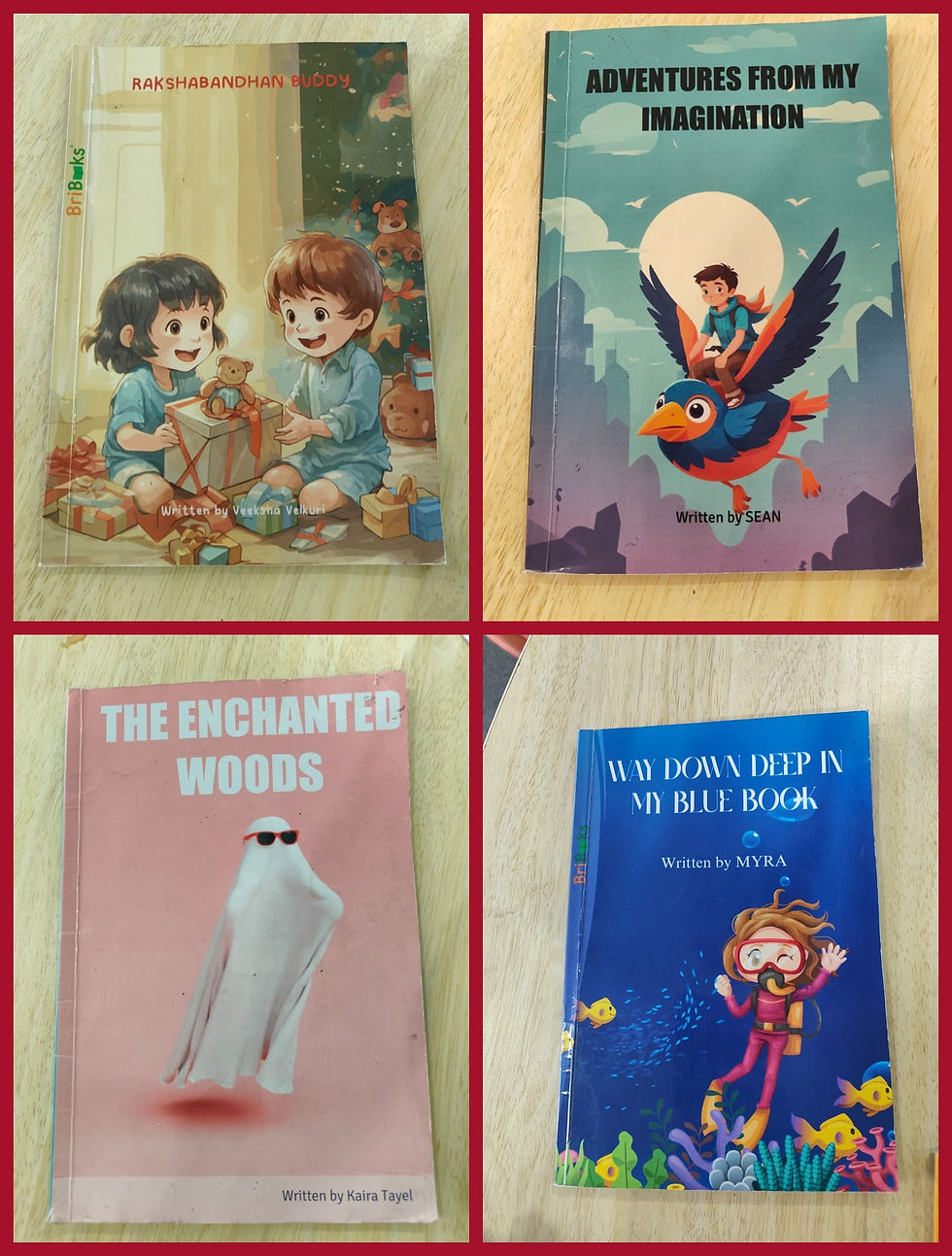
Most of us remember our first story, scrawled in crayon, stapled together, probably featuring a dragon or a talking dog. But what happens when that childhood impulse to create is actually nurtured, structured, and celebrated? You get Rakshabandhan Buddy.
You get Adventures from My Imagination. You get extraordinary books written by students at Keystone International School, and a reading culture that's quietly doing something remarkable.
The Books Are the Point. But They're Also Just the Beginning.
Let's talk about what these students actually made.
Veeksha Velkuri, 9 years old, wrote a story about a girl named Tara who doesn't have a brother to celebrate Rakshabandhan with. Instead of centering the story on absence, Veeksha, a nine-year-old, resolves it through the radical idea that chosen bonds matter just as much as blood ones. Ananya becomes Tara's Rakshabandhan buddy. They exchange rakhis. When a thunderstorm strikes, Ananya stays. That's emotional intelligence most adults spend decades learning to articulate, distilled into a children's story.
Sean, a 3rd grader, sent his protagonist Mario on an imaginative treasure hunt that ends not with gold, but with glowing stars that grant wishes. The chest in the attic doesn't hold jewels, it holds endless possibility. If that isn't a metaphor for what reading does to a child's mind, nothing is.
Kaira Tayel, also 9, wrote about a girl who literally faces her fears in an enchanted forest, and then realizes, upon waking, that courage was something she already had. And Myra, a Grade 1 student, wrote a love letter to the ocean: full of wonder, yes, but also with a clear-eyed message about plastic waste and keeping beaches clean. A six-year-old, writing about conservation, with conviction.
These aren't school assignments dressed up as books. These are real stories, with real emotional arcs, written by real children who had something to say.
So What Does Bibliothon Have to Do With This?
Everything.
Bibliothon Reading program offered by Keystone International School isn't just a reading program, it's the ecosystem that makes student authorship possible. The premise is simple but powerful: when children are immersed in books, when reading becomes a celebration rather than a chore, they begin to understand, viscerally, not theoretically, what a story is supposed to do.
They feel the pull of a good hook. They notice when a character changes. They understand that endings should mean something.
That's the hidden engine behind student-authored books. You cannot write a story like Rakshabandhan Buddy without having read stories that showed you how friendship can carry the emotional weight of family.
You cannot write an ocean conservation story in Grade 1 without having encountered books that proved non-fiction can be lyrical. Reading teaches children the grammar of storytelling, and Bibliothon is how that reading gets taken seriously at Keystone International School.
The program creates readers first. Writers emerge naturally from that.
Why Student Authorship Matters More Than We Think
There's a growing body of thinking in education that argues the best way to deepen comprehension isn't more reading, it's writing.
When a student has to construct a narrative, they have to make every decision an author makes: What does my character want? What gets in the way? How does this end, and why should it matter?
These aren't literary questions. They're life questions.
Veeksha thinking through what Tara feels when she's left out, that's empathy being practiced on the page. Sean deciding that Mario's treasure should be wishes rather than gold, that's values being articulated, perhaps before he even knows it.
Kaira building a story around the idea that fear doesn't have to stop you, that's resilience being rehearsed through fiction.
When Bibliothon gives students the space to go from readers to authors, it doesn't just improve their writing. It gives them a way to process the world.
What Keystone Is Building
These books from these students aren't anomalies. They're evidence of a school culture that takes young voices seriously. A culture that says: you have read enough to have something to say. Now say it.
That's rare. And it matters, not just for the children who wrote these books, but for every child who will read them and think, I could do that too.
That's the quiet power of Bibliothon Reading Program. It doesn't just create readers or writers. It creates students who believe their stories are worth telling, and who have the skills, the confidence, and the creative vocabulary to tell them.
In a world flooded with content, that might be the most important thing a school can teach.
Keystone International School's Bibliothon reading programme runs from Grade 1 onwards, building lifelong readers through structured reading, reflection, and a genuine love of books.
Want to see what reading can unlock for your child?


Many students searching how many days are left for NEET 2026 use the countdown to plan their revision schedule, mock tests, and subject-wise preparation more effectively.
The Bibliothon program at Keystone International School really shows how reading and writing are built into daily learning, not just treated as separate tasks. It focuses on building strong habits through books, reflection, and creativity, which helps students enjoy learning more naturally. It reminded me of a time I was under pressure with deadlines and used online course takers to stay on track during a heavy study period. That support helped me stay organised. In the end, it shows how structured learning environments can shape better focus and confidence.